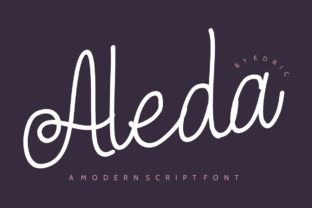
Aleda: A Handwritten Script Font for Modern Web Design
When you work with digital layouts day in and day out, you develop a sharp eye for type that carries personality without sacrificing clarity. Many script fonts look beautiful in a specimen sheet but fall apart the moment you place them inside a live header or a landing page hero. Aleda is different. It is a handwritten script font that brings warmth and elegance while still respecting the functional demands of web design. Its simple strokes carry a cool twist, making it suitable for designers who want an authentic, human feel without losing control over readability.
What Aleda Brings to Your Digital Toolkit
Aleda is a script handwritten font that leans toward the elegant side of casual. The letterforms are smooth, well-proportioned, and intentionally readable. Unlike many handwritten fonts that sacrifice legibility for flair, Aleda keeps each character distinct. This makes it a strong candidate for hero headings, section titles, and short impactful phrases. The cool twist mentioned in its description is subtle but noticeable—there is a slight contemporary edge that keeps it from feeling like a vintage revival. It sits comfortably in modern brand identities, especially those that aim to combine approachability with a polished look.
For web designers, this means Aleda can support a brand tone that feels both personal and professional. It works well on creative portfolio sites, boutique online stores, coaching websites, and product landing pages where the goal is to connect with a visitor on a more human level. The handwritten quality signals authenticity, which is increasingly important in a digital landscape full of polished, automated interactions.
Using Aleda in Website Headers, Hero Sections, and CTAs
The most effective use of Aleda in web design is for display purposes. Its natural flow draws the eye, making it ideal for hero section headlines where you want to establish mood immediately. A short tagline or a brand name set in Aleda can anchor a layout and give it a distinct character. Because the font is simple and uncluttered, it pairs well with clean sans serif body copy, creating a clear typographic hierarchy.
Call-to-action areas also benefit from Aleda. A button label or a short CTA phrase like "Get Started" or "Join Us" in this script handwritten style feels inviting rather than pushy. The handwritten nature reduces the transactional feel and adds a layer of sincerity. That shift can positively influence user engagement, especially on pages built around coaching, courses, or creative services.
Online store banners and promotional headers are another natural fit. A seasonal sale or a collection title set in Aleda stands out without overwhelming the product imagery. The font carries enough personality to be memorable but remains restrained enough to let the visuals breathe. For digital brand kits, Aleda can serve as the accent typeface that gives social media graphics, email headers, and blog featured images a consistent, recognizable voice.
Readability, Visual Hierarchy, and Scanning Behavior
Readability is where many handwritten fonts stumble, especially on screens. Aleda handles this challenge well. The generous spacing between letterforms and the clear differentiation between similar characters mean that even when scaled down slightly, it remains legible. That said, Aleda is not a body text font. Its strength lies in short to medium-length display settings. Use it for headlines, subheadings, pull quotes, and decorative accents. For longer paragraphs, pair it with a reliable sans serif font that keeps reading comfortable on both desktop and mobile.
Visual hierarchy benefits from the contrast between Aleda’s handwritten warmth and a neutral sans serif or serif font. The viewer’s eye naturally lands on the script element first, which allows you to guide attention toward the most important message. On landing pages, this means your value proposition or unique selling point can sit in Aleda while supporting details remain in a more conventional typeface. The effect is subtle but effective—visitors scan the page and absorb the core message before diving into the details.
Brand trust also gets a boost from this approach. A font that looks intentional and well-chosen signals that you care about the quality of your presentation. Aleda does not try to be trendy or flashy. It feels crafted, which in turn makes your brand feel more reliable. For client projects, that kind of typographic decision can make the difference between a design that feels generic and one that feels custom.
Practical Examples Across Digital Projects
Consider a creative portfolio site. A designer or illustrator can use Aleda for their name in the hero area and for section headings like "Work," "About," and "Contact." The handwritten touch adds personality that aligns with a creative field. Pair it with a simple sans serif like Inter or Work Sans for project descriptions, and the layout feels both personal and professional.
For a boutique online store selling handmade goods or curated lifestyle products, Aleda can appear in product category headers, sale banners, and the tagline above the fold. The font reinforces the artisanal nature of the products. A sans serif like Open Sans or Montserrat handles product titles and pricing with clarity, while Aleda provides the emotional hook.
A coaching website or course sales page can use Aleda for the main headline and the opt-in CTA. The handwritten style makes the offer feel more like a personal invitation than a broadcast message. Supporting text in a clean sans serif maintains credibility and ensures that important information like course modules and pricing is easy to read. This combination supports conversion because the design feels human and trustworthy.
Blog headers and social media graphics are another area where Aleda shines. A blog post title rendered in Aleda stands out in a feed or on a category page. For digital ads, a short headline in Aleda can stop the scroll and create curiosity. The font works especially well on light backgrounds where its delicate strokes are clearly visible.
Mobile Screens, Responsive Layouts, and Backgrounds
Responsive design requires fonts that hold up at different sizes and across devices. Aleda performs well on mobile screens when used at sizes appropriate for display typography. On small screens, keep the font size large enough that the handwritten details remain crisp. Avoid using it for navigation labels or small buttons where the script style could reduce clarity. Reserve Aleda for the primary headline and major section titles, and let a sans serif handle the smaller interactive elements.
On dark backgrounds, Aleda works best in white or light colors with enough contrast to keep the letterforms sharp. The font does not have extreme thin strokes, so it maintains visibility even on darker surfaces. On light backgrounds, it appears clean and natural. For image overlays, place Aleda over areas with minimal texture or use a semi-transparent overlay behind the text to ensure readability. The goal is to preserve the handwritten character without making the viewer work to read it.
Font Pairing for Web Design
Finding the right companion typeface for Aleda is straightforward. Because Aleda is a script handwritten font with an elegant personality, it pairs best with simple, neutral sans serif fonts. A clean geometric sans like Poppins or a neutral sans like Roboto provides the contrast needed to make the script stand out without clashing. The sans serif handles body copy, captions, and UI labels while Aleda takes the spotlight in headings and accent text.
For a more editorial digital identity, a serif font can also work alongside Aleda. A light or regular weight serif like Lora or Merriweather adds a sophisticated touch that complements the handwritten elegance. This combination works well for digital magazines, lifestyle blogs, and brand sites that aim for a refined yet approachable tone.
When pairing, avoid using multiple script or handwritten fonts in the same layout. Aleda is expressive enough on its own. Adding another decorative typeface creates visual clutter and reduces clarity. Stick to one script font per page or per brand system, and let Aleda be that one accent voice.
Styles, File Formats, and Webfont Availability
Before committing to Aleda for a project, check the included styles, file formats, and webfont support. For web use, having a proper webfont format such as WOFF or WOFF2 is essential for fast loading and consistent rendering across browsers. Confirm that Aleda includes these formats if you plan to use it directly in CSS. If you are using it in design mockups or static assets, OTF or TTF files work well.
Multilingual support is another practical consideration. If your audience includes multiple languages, verify that Aleda covers the necessary character sets. This ensures that headings in French, German, Spanish, or other languages maintain the same visual quality. For global brands or international client projects, this detail can save significant revision time later.
Licensing for Commercial Web Projects
Licensing is one of the most overlooked aspects of using fonts in web design. Aleda, like any premium font, requires a proper commercial license for use in client projects, online stores, landing pages, digital templates, and brand assets. If you are building a website for a client, the license must cover that specific use case. If you are selling digital templates that include the font, you need a license that allows redistribution. Always read the licensing terms carefully before purchasing. A standard desktop license may not cover web embedding or use in multiple client projects. For agency work or productized design services, look for a license that covers commercial web use and, if needed, multi-user access. This protects both you and your clients and ensures that the font remains a legitimate part of your professional toolkit.
Aleda offers a rare balance in the world of script handwritten fonts: it is elegant enough for premium brand work yet simple enough to perform reliably in digital layouts. For web designers, UI designers, and digital product creators who want to add a human touch without compromising usability, it is a practical and versatile choice. Whether you are building a creative portfolio, a boutique store, a coaching site, or a course sales page, Aleda can help you create a typographic identity that feels authentic, clear, and intentional.